
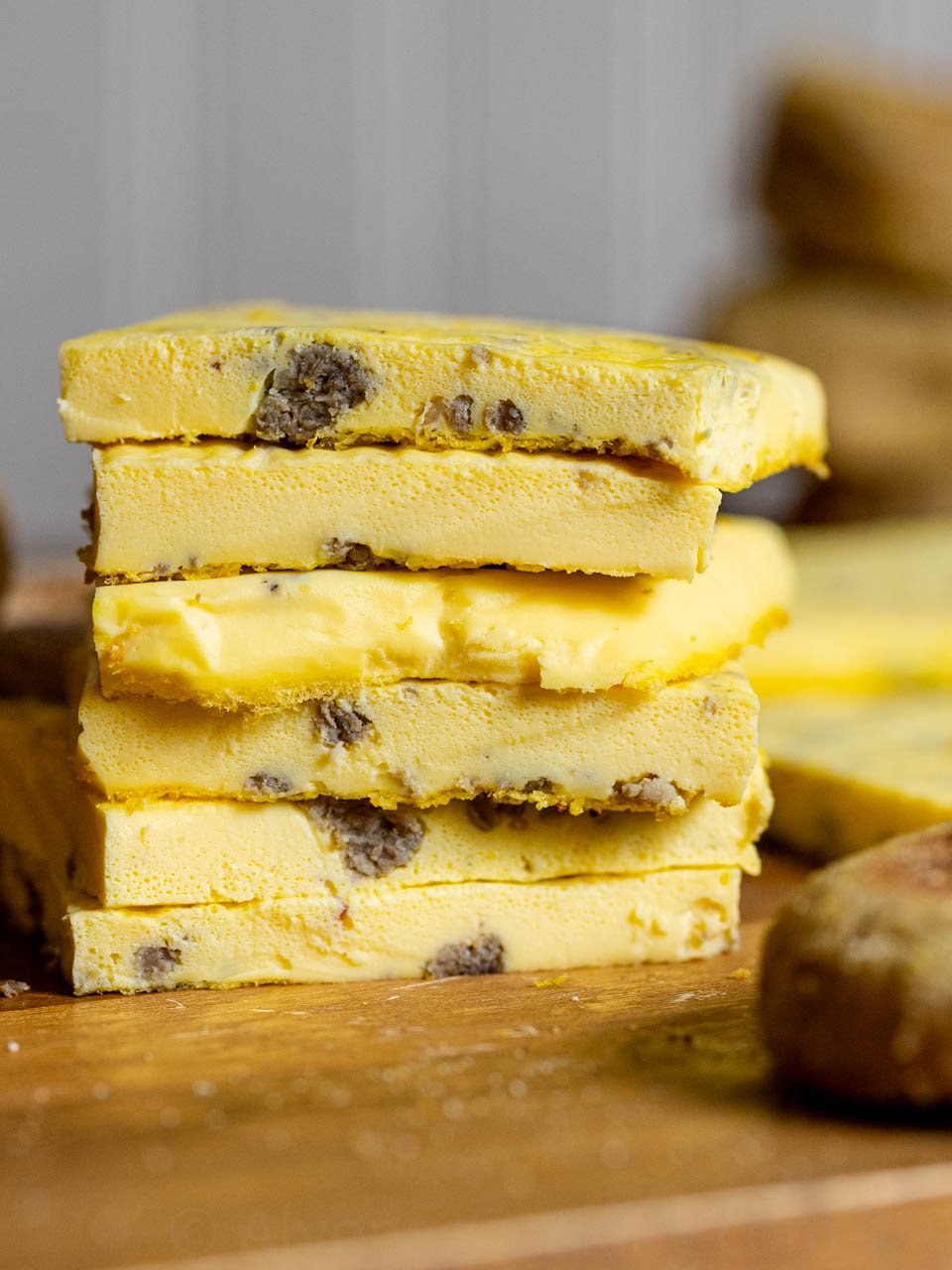
Sheet Pan Eggs
Sheet pan eggs are perfect for sandwiches! They're creamy and rich, easy to make and stay moist and velvety, even after the freezer! The secret is using cream cheese!
Equipment
- 1 heavy-duty blender, (64-ounce capacity)
Instructions
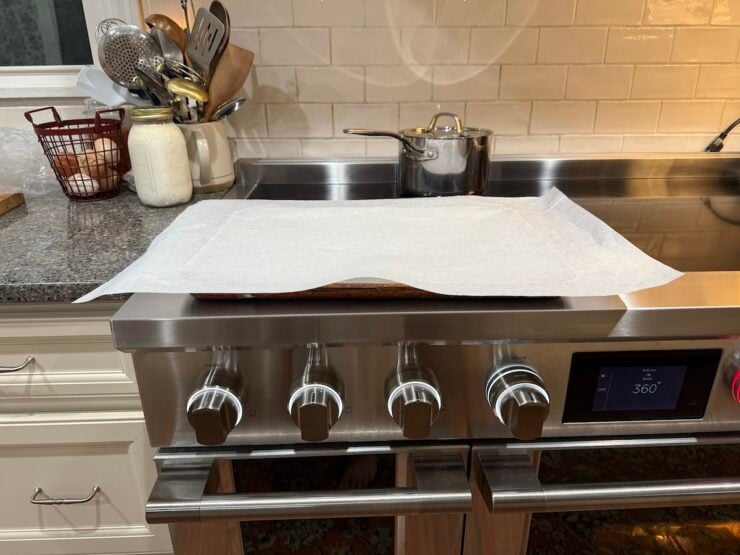
- Preheat the oven to 425°F (218°C). Line a sheet pan with parchment paper and set aside.
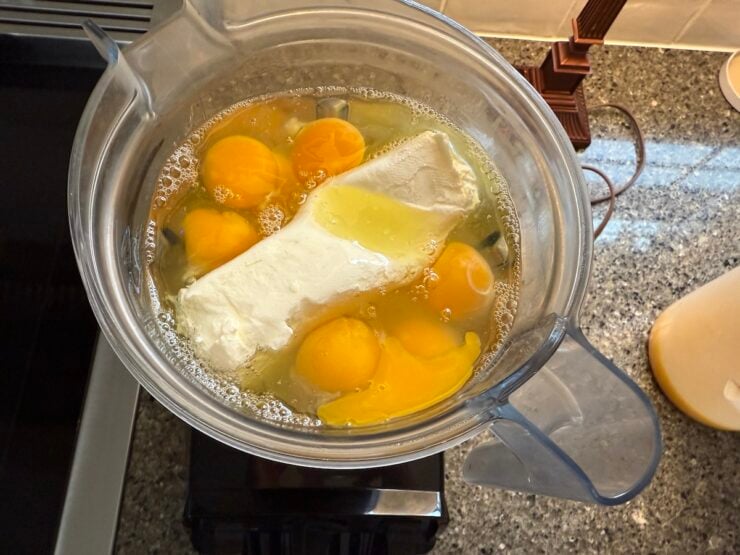
- Crack two dozen eggs into a medium mixing bowl first, to catch any egg shells. Transfer all the eggs into a blender (at least 64-ounce capacity). Add 8 oz of cream cheese (cold) and blend for 15-20 seconds until the cheese is smooth.
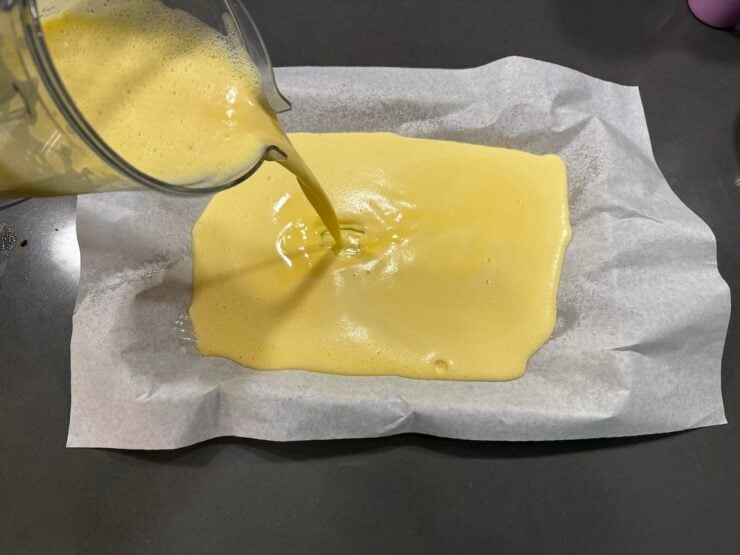
- Pour the eggs over the prepared pan and bake in the oven for 12-15 minutes. Cool before slicing into squares. Makes about 24 squares.
Notes
- Dairy-Free Option: omit the cream cheese and beat 1 cup of cold water with the eggs. These sheet pan eggs will still be as moist with water.
- Serving size: each square is about two eggs per serving.
- Over-beating the eggs causes the air bubbles to collapse when baking. The proteins also expel water, and the foam ends up weeping liquid, resulting in a less fluffy product.
- It is normal for the top layer of the eggs to fluff up during baking. They will deflate and still be moist inside.
- Omit the salt if using salted meats. I sprinkled 5 ounces of crumbled and cooked breakfast sausage over the eggs before baking. You could also add 12 oz of cooked bacon, crumbled.
- Freezing in Sandwiches: Cut eggs into 24 squares. Place each square into an English muffin or bagels. Top with a slice of your favorite cheese and wrap each sandwich with aluminum foil. Then freeze up to 6 months. Place all the wrapped sandwiches in a jumbo freezer bag for easier handling.
- Plastic Wrap vs Foil: use plastic wrap if you are planning to microwave the sandwiches and foil if you are planning to reheat them in the oven.
- Reheating: To reheat frozen egg sandwiches, place thawed sandwiches onto a sheet pan wrapped in foil. Bake in the oven at 350°F for 20 minutes.
- Refrigerating: If you're not using these right away, cut the sheet pan eggs in half and stack them between parchment paper in the pan. Doubled wrap it in plastic wrap and keep refrigerated for up to 2 days.
- Use a solid pan if you don't want ridges in your eggs. I used a USA sheet pan and had lines on the bottom (the smoothest side of the eggs). It really doesn't make a difference but I thought I'd note it incase you want a better presentation.
Nutrition Facts
Sheet Pan Eggs
Serving Size
1 egg square
Amount per Serving
Calories
96
% Daily Value*
Fat
7
g
11
%
Saturated Fat
3
g
19
%
Trans Fat
0.02
g
Polyunsaturated Fat
1
g
Monounsaturated Fat
2
g
Cholesterol
173
mg
58
%
Sodium
286
mg
12
%
Potassium
73
mg
2
%
Carbohydrates
1
g
0
%
Sugar
1
g
1
%
Protein
6
g
12
%
Vitamin A
365
IU
7
%
Calcium
34
mg
3
%
Iron
1
mg
6
%
* Percent Daily Values are based on a 2000 calorie diet.
