

This post may contain affiliate links. Read our full disclosure.
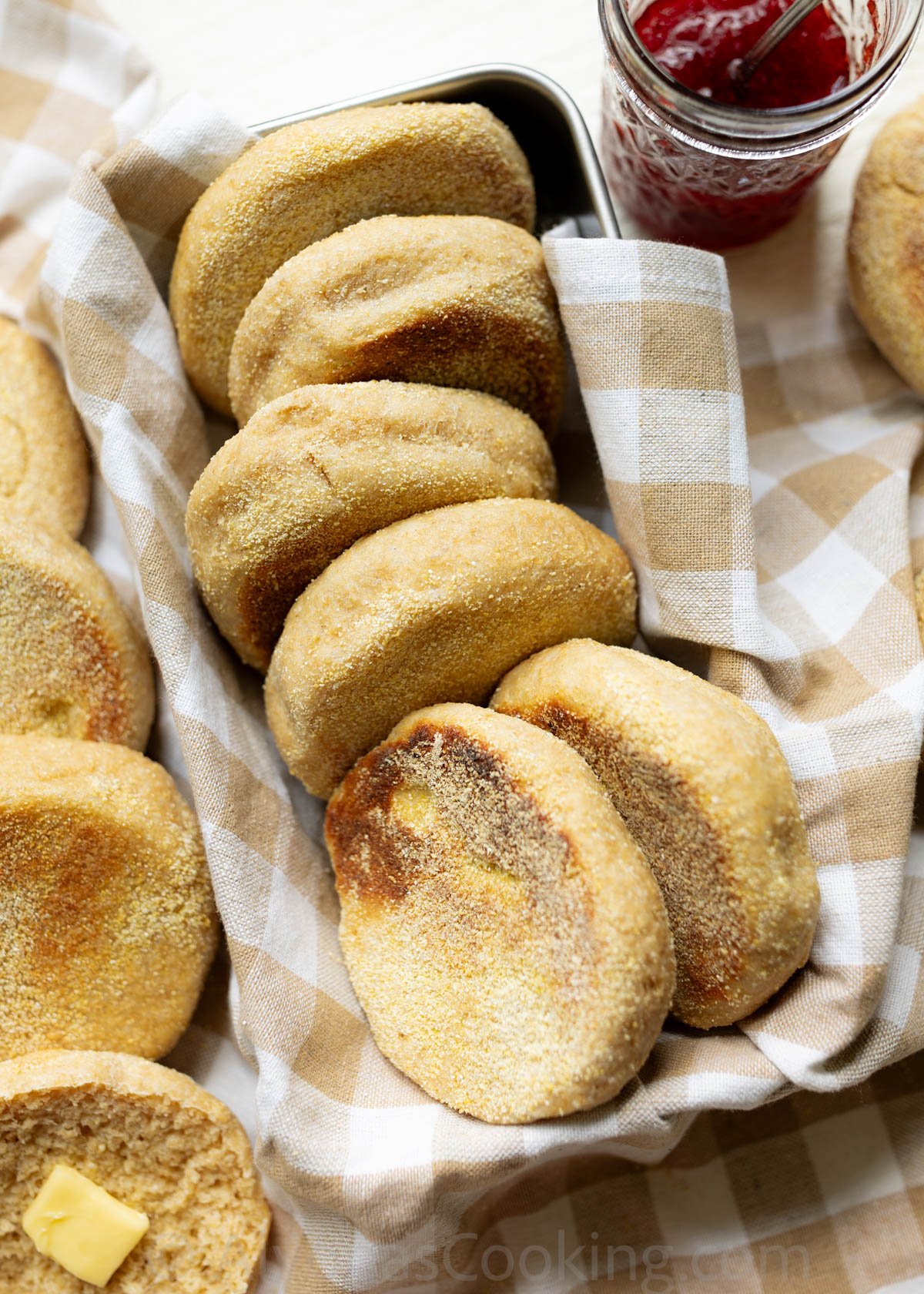
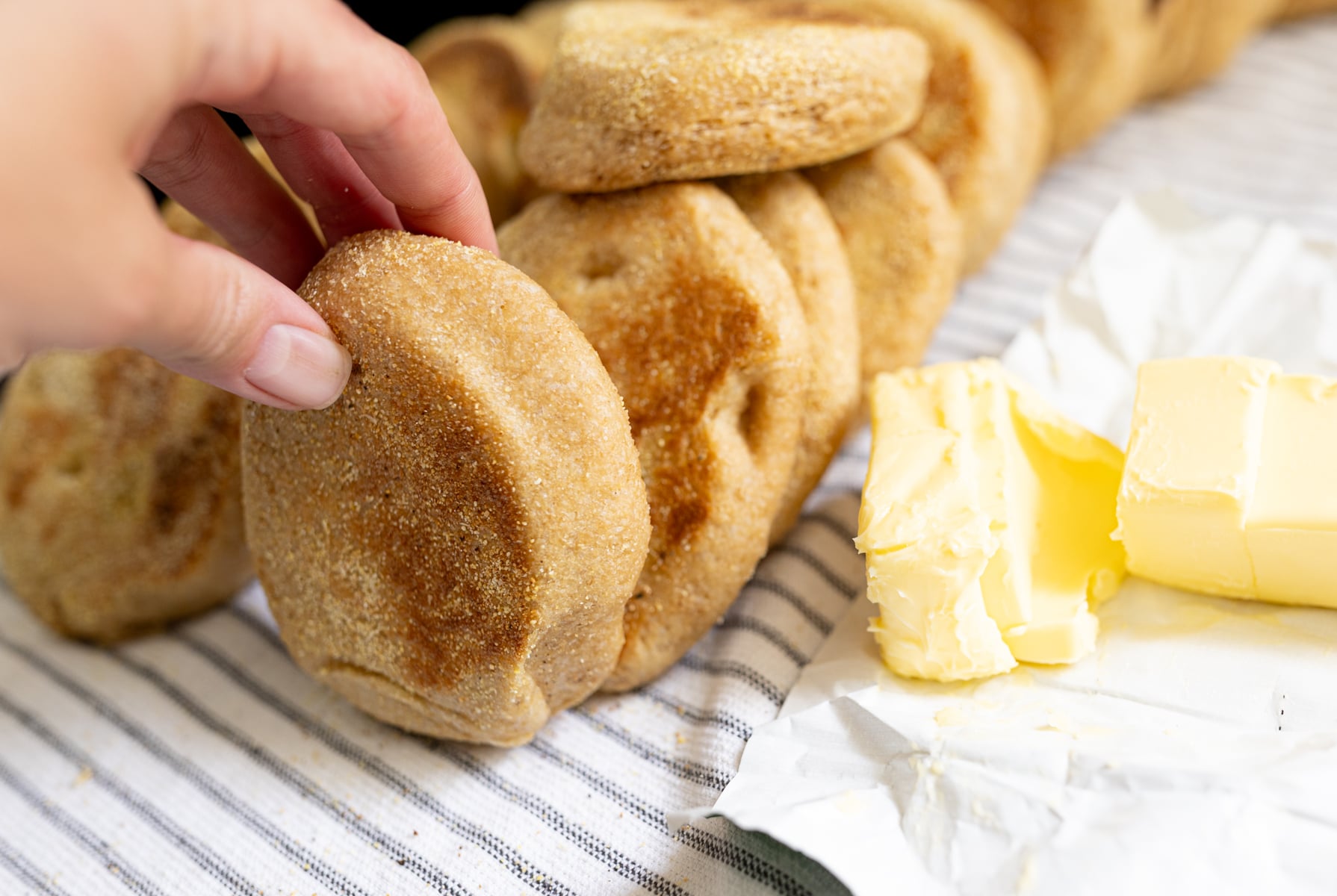
Who said fresh milled flour English muffins are missing the nooks & crannies texture? These soft dozen, flat and chewy muffins are delightful and ideal for butter, jam, cheese, or eggs sandwiches.
I’ve made these whole grain English muffins for freezer breakfast sandwiches (recipe included down below) and you can make them for quick pizzas, and Smoked Salmon Eggs Benedict!
They’re wholesome, and the buttermilk imparts a tangy and moist flavor we all love in the original English muffins!
Fresh Milled Flour English Muffins
We love these healthy, whole wheat English muffins fresh off the cast-iron skillet! My eight-year-old will snack on these without anything! It only takes seconds to turn whole grains into fresh milled flour (with the help of my powerful electric grain mill) and the health benefits are all worth it.
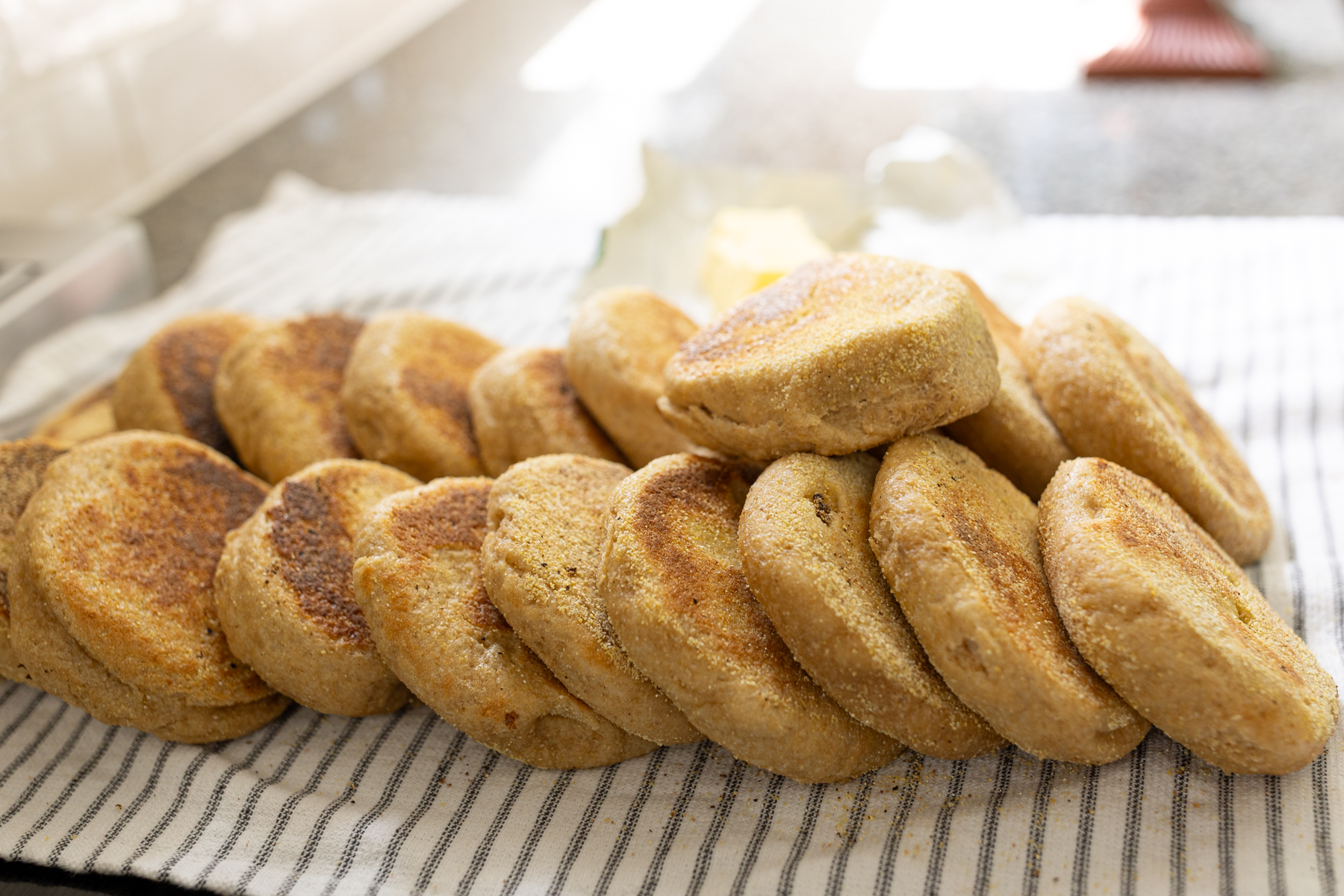
I use 100% of hard white wheat berries that I purchase from Azure Standard and mill at home. English muffins are best made with a higher protein grain or flour to achieve a soft and stretchy dough perfect for nooks and crannies.
How This Whole Grain English Muffin Recipe was Created:
This English Muffin Recipe Came to be when I decided to batch prep breakfast sandwiches for the freezer. I didn’t want to bother with sourdough (although I share a sourdough variation down below), so I decided that dry active yeast would just have to do.
This recipe makes 12 sandwich-sized English muffins, but I double it when I need to make two dozen freezer breakfast sandwiches.
Although these English muffins are made with commercial yeast, I still wanted to impart that tangy flavor and sourdough aroma. So, I used homemade kefir, but you can easily use buttermilk or soured milk.

I also refrigerated the dough to get that complex sourdough flavor. Which works in my favor as I can quickly make up the dough, let it sit while I clean up, and pop it in the fridge for the next day.
This way it breaks up some of the labor and gives it time for the whole grains to break up some of the phytic acid and soak up the liquid (because it is a sticky dough). It also makes batch cooking easier, as it’s so handy to have the English muffin dough ready for the next day.
If you are short on time, you can skip the refrigeration and bake it on the same day. The English muffins will still have a tangy flavor from the kefir and taste just as delicious!
Everyone devours this bread from the toddler to the adult at our farmhouse. Sometimes I don’t even get to freezing them, but that’s okay because I can whip up these English muffins easily at any time!

Can I Make These Into Sourdough English Muffins?
I’m a weekly sourdough baker, so incorporating sourdough is very important to me, especially when it comes to feeding my family healthy bread. As I had mentioned earlier, I used commercial yeast to make up for the need to feed my starter, making it a convenience. In my opinion, this is already a better option than opting for the store-bought stuff that has so many additives and doesn’t taste as good as homemade English Muffins.
If you want to make these into whole wheat sourdough English muffins, simply decrease the kefir by a quarter cup and add 3/4 cup of active sourdough starter to the dough. This will have to bulk ferment at room temperature for at least 4 hours before refrigerating overnight, or allow it to go 2 more hours and shape, rise, and cook the same day.
How to Achieve that “Nooks and Crannies” Texture:
English muffins can be more expensive to produce than bagels because of the fat and milk components, as well as the labor. It makes a stickier dough to get those nooks and crannies, which is best shaped by hand. This is where they can get pricey, as machinery can be costly to produce this texture. The more hydrated the dough, the more nooks and crannies you can achieve. The key factor is to get the right thick and slightly sticky dough consistency.

Mise en Place
Equipment Needed:
- 12-inch Cast-Iron Skillet
- Large Mixing Bowl
- Set of measuring spoons and cups
- Electric Grain Mill
Ingredients:
- Cultured Buttermilk- or Milk Kefir to impart that tangy flavor we all love in English muffins!
- Honey- we use raw honey right from our bee hives! The closest taste to home-harvested honey is this raw wildflower honey.
- Salted Butter- I only use the yellow Pure Irish butter (which is always salted from Aldi) or this Organic butter.
- Salt- I used Redmond Real Salt.
- Hard White Wheat Flour- that I mill from hard white wheat berries. To make 4 cups of freshly ground flour, run about 3 cups of grains through the grain mill.
- Cornmeal- so that the English muffins don’t stick to the surface or skillet.
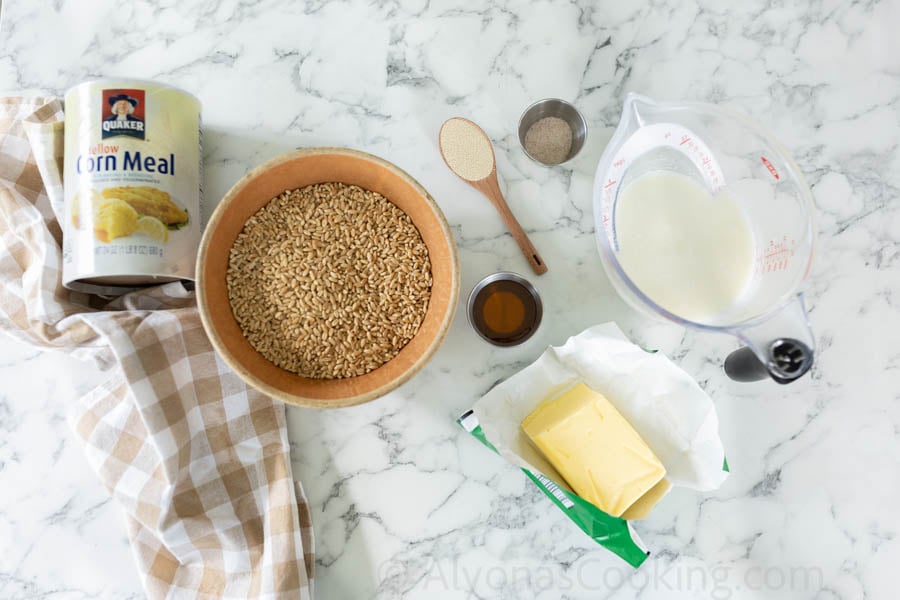
How to Make English Muffins Using Whole Grains:
See the recipe card down below for a full tutorial with step-by-step photos.
- In a small saucepan, heat the buttermilk with butter to 80°F. Don’t overheat buttermilk as it can curdle. The butter will not completely melt, but that’s fine; it will soften. Set aside.
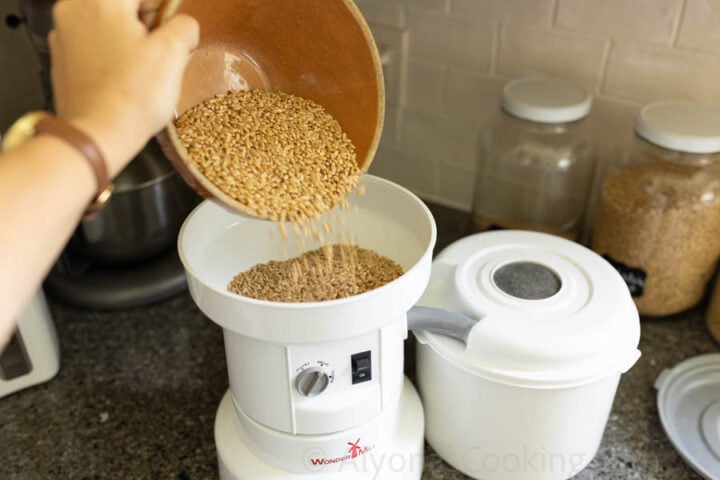
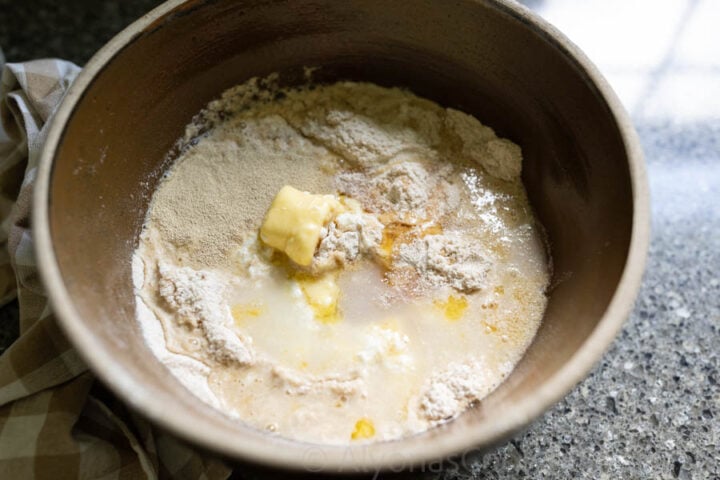
- Run the hard white wheat berries through a grain mill and transfer the warm, freshly milled flour into a large bowl. Pour in the buttermilk mixture (make sure it’s not too hot) and sprinkle over the dry active yeast.
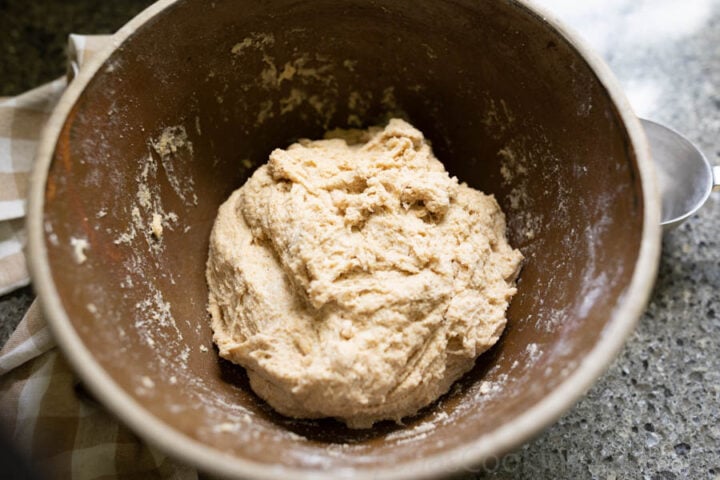
- Add the honey and salt and mix together to make a soft and sticky dough. Let it sit for one hour at room temperature covered to proof and then refrigerate overnight. If you need them the same day, shape them after the first rise and let them rise for another 30-40 minutes. Then cook in a skillet, covered, until cooked thoroughly.
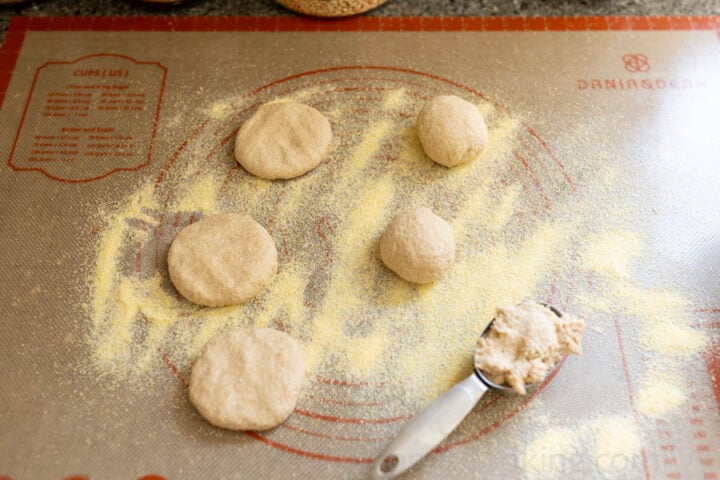
- The next morning, remove the dough from the fridge and let it come to room temperature (about 1-2 hours). Sprinkle your work surface generously with cornmeal. Using a 1/3 cup measuring cup, scoop the dough out and shape into balls. Place the balls directly on the cornmeal and flatten into disks. Sprinkle the tops with cornmeal and let them rise uncovered for 30 minutes.
- Preheat a 12-inch cast-iron skillet over low heat (I used the number 3 setting on my stove). This is key to getting soft and chewy centers without drying out the outsides.
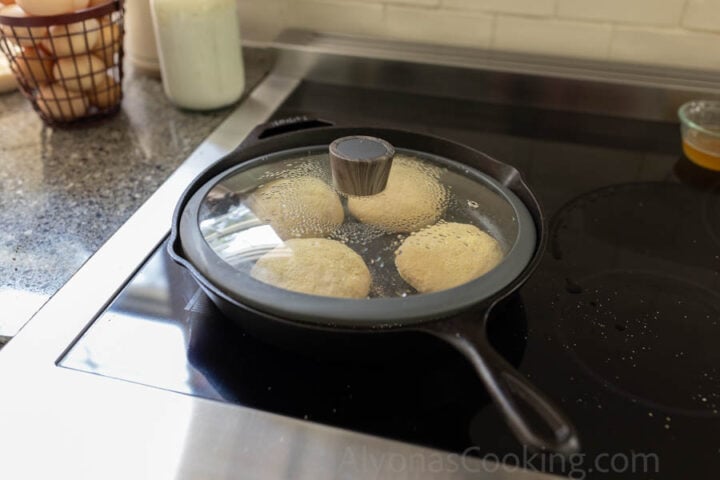
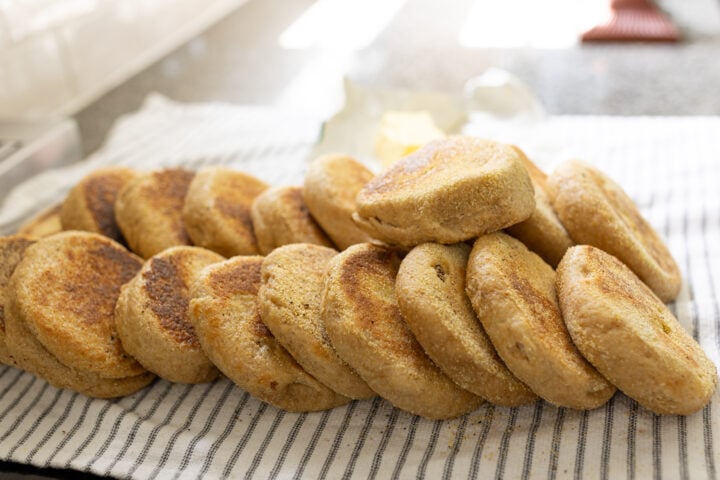
- Cook the whole wheat English muffins covered with a lid for 5-6 minutes on each side. Using a lid will steam and cook the muffins. The English muffins are ready when the internal temperature reaches 190°F (88°C). Cool the English muffins on a kitchen towel completely before storing.

How To Properly Cut an English Muffin:
Although there is no wrong way to cut into English muffin bread, there is a little trick to get all those nooks and crannies to show. Run a sharp serrated knife around the edges of the round English muffin, don’t slice all the way through. Then, with your fingers, split open the bread. This pulls and creates texture, showcasing all of those nooks.
Ways To Serve English Muffins:
We all know English muffins are a breakfast staple, but what to put on an English muffin can make a delicious breakfast or dinner, depending on how you top it. Here are classic ways to serve them up!
- Obviously, toasted English muffins with butter and jam are a favorite, but toasting revives the soft bread and brings out the flavor.
- An English muffin pizza is a kid favorite! Simply split an English Muffin open, top each half with pizza sauce, cheese, and pepperoni. If you make a big batch, you can pull them out and make a quick dinner with these.
- Homemade English muffins make amazing breakfast sandwiches for the freezer! I blend two dozen eggs in a blender with one pack of cream cheese, then pour it out onto a sheet pan lined with parchment paper. Bake at 425°F for up to 15 minutes. Then cut into squares.
- Lunch sandwiches– top them with deli meat and crisp lettuce, and veggies to make a light lunch.

Storing:
Whole wheat English muffins are moist, soft, and store incredibly well at room temperature. English muffins made with commercial yeast can be kept at room temperature for up to 3 days (with sourdough, longer). I don’t recommend refrigeration unless you know they will be toasted. Refrigeration can dry out the English muffins.
Can You Freeze English Muffins?
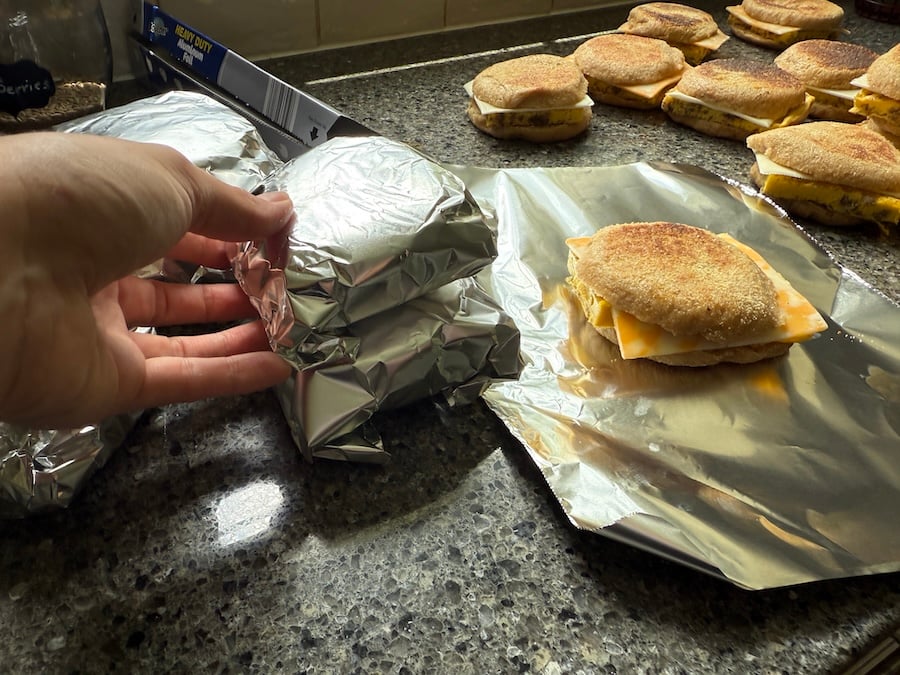
Always cool bread products before freezing, assembling in sandwiches, or storing in a bread bag. These whole wheat English muffins can be frozen up to 3 months as sandwiches or bread. If you’re making sandwiches for the freezer, wrap each English muffin individually for easier reheating. I find that English muffin breakfast sandwiches reheat best when thawed and wrapped in foil at 350°F for 25 minutes.
Tips For Making Whole Wheat English Muffins:
- Allow the dough to hydrate and soak up the liquid properly. Buttermilk is acidic and can speed up the Autolyse process.
- Freshly milled flour is fluffier and not as compact as white flour, so fill up your measuring cup full and gently pack it down to make a full cup.
- Use a 1/3 cup measuring cup to scoop out the portions instead of cutting and rolling out the dough.
- Generously sprinkle your work surface with semolina or cornmeal so that the dough doesn’t stick to the surface. This will help keep it from sticking to the skillet, too.
- Cook these whole wheat English muffins over a steady low heat; too high of a temperature and the crust will get too brown and hard. I cook mine over a number 3 heat setting and let it go for a little longer to fully cook through. Using a lid is a must to cook through the middles; otherwise, you will need to finish them in the oven.
- Cool completely before storing or assembling in sandwiches. If you wrap them up warm, it will cause condensation (and frost). It can also melt the cheese too soon in freezer sandwiches.
If you Love Whole Grains, Check Out These Bread Recipes:
Fresh Milled Flour Recipes:





Join My Weekly Newsletter
New recipes, homesteading, family life, what we eat in a week, and hospitality tips.
Pin this now to find it later

English Muffins with Fresh Milled Flour
Equipment
- 1 grain mill, (I have the canister attachment)
- A set of measuring spoons and cups
Ingredients
Ingredients:
- 2 cups Buttermilk or Homemade milk kefir, *see notes
- 2 Tbsp honey
- 3 Tbsp salted butter, (I used salted but unsalted will work too)
- 2 tsp sea salt
- 4 cups freshly milled hard white flour , (milled from hard white wheat berries)
- 1 Tbsp dry active yeast
Instructions
Directions:
- In a small saucepan, heat the buttermilk* and butter to 80°F (do not overheat as it can curdle). You want warm but not hot buttermilk to activate the yeast. Set aside.

- Run your wheat berries through a grain mill. Measure 4 cups of freshly milled flour into a large mixing bowl.
- Pour in the buttermilk mixture and sprinkle over the yeast. Add the honey and salt, then mix the dough with your hands until it becomes soft and sticky. Cover and rest for 1 hour.
- After the dough has risen, punch it down and refrigerate it covered overnight or for 8-12 hours to create a tangy sourdough aroma. See notes for same-day baking.**
- Bring the dough to room temperature (about 1 hour). Meanwhile, generously sprinkle the work surface with cornmeal. Using a 1/3 measuring cup, scoop out the dough and form it into balls. Flatten them over the cornmeal and sprinkle the tops with cornmeal. Allow them to rise 30-40 minutes uncovered.
- Preheat a large cast-iron skillet over low heat. Gently place 4-5 English muffins into the pan and cover with a lid (from a large pot). Cook them over low heat (number 3 setting on my stove) for 5-6 minutes per side.
- Arrange them on a kitchen towel and let them cool completely before storing.

Notes
- Cultured buttermilk, milk kefir, or soured milk give English muffins a tangy flavor and nook & crannies texture. If the buttermilk curdles when warming, no worries, it can still be used. If using soured milk, you may need to add up to 3/4 cup more of freshly milled flour.
- To cook the same day, after the first rise, shape the dough as instructed and proceed with the recipe. Overnight refrigeration imparts a more complex, tangy flavor, but the buttermilk helps, too.
- Mill about 3-31/2 cups of wheat berries to make 4 cups of fresh milled flour.
- If you’re left with extra fresh milled flour, then refrigerate it in a gallon zip-lock bag until needed. Freshly milled flour can go rancid at room temperature.
- Storing Whole Wheat English Muffins: Cool completely before storing in a bread bag or assembling in sandwiches. Homemade English Muffins will keep good for up to 3 days at room temperature.
- Scooping out the dough saves time from cutting and working with scraps.
- For English muffins breakfast sandwiches, I blend two dozen eggs in a blender with one pack of cream cheese, then pour it out onto a sheet pan lined with parchment paper. Bake at 425°F for up to 15 minutes. Then cut into squares.
Nutrition (per serving)
Tried this recipe?
Mention @alyonascooking or hashtag #alyonascooking.