


This post may contain affiliate links. Read our full disclosure.
Over the years I have converted many favorite recipes to whole wheat flour recipes. Freshly milled flour is amazing in this Rich Chocolate Cake, Coconut Chocolate Chip Cookies, and Blueberry Muffins! We also love this Whole Wheat Bread Recipe, and Whole Wheat Pancakes.You can make anything with whole wheat flour if it’s fresh-milled!
What is Whole Wheat Flour?
The healthiest bread you can make is with whole wheat flour, milled fresh. It’s in its whole state meaning the bran and germ (outer wheat berry components) are still in tact. These contain a major part of the nutrition of wheat. Sadly about 90% gets left at the mill and you lose many health benefits. Whole grains are rich in vitamins and are an important part of our daily diet.
My grain mill does a great job of grinding the wheat berries to a powdery consistency to make a fine flour. This is very important so that the bran and germ don’t weigh down the dough, making a dense loaf.
For the optimal smooth and elastic results in your dough, look for wheat berries higher in protein, like hard wheat varieties (particularly hard red and hard white wheat varieties).
Whole grains are also rich in fiber (which will help you go to the bathroom).
Using Whole Wheat Flour for White Flour
I’ve been baking with freshly milled flour for years, and what I’ve learned is that you can adapt almost any recipe to use whole wheat flour.
I have successfully recreated many recipes, so I decided to create a conversion chart to help you convert recipes to freshly milled flour, making your baking easier.
Whole wheat flour needs more water to absorb than white flour. This is something you realize when you start incorporating more whole grains.
If you think about it, white flour is more compact and similar to a cornstarch consistency so if you add liquid to it, it tends to thicken right away. Whereas whole wheat flour is ground with the bran and germ intact making it slower to soak up any liquids.
Why Sourdough Goes with Whole Wheat Flour:
Another thing I realized was that sourdough starter with whole wheat flour is a perfect match! You can make delicious bagels, biscuits, pizza dough, and so many other baked goods using freshly milled whole-wheat flour and sourdough!
Fresh whole wheat flour has something called Phytic acid. That’s the substance that keeps the seed (the wheat berry) from sprouting until it’s put back in the ground. This makes it harder to digest because it’s an enzyme inhibitor. So, you know those things that help you break down your food? It actually stops them from working, which makes whole wheat hard to digest.
However, sourdough is an old method of bread baking and neutralizes this phytic acid. So, when the wheat is soaked and fermented in the starter it makes it easier to digest wheat.
Plus, I find that baking with whole wheat and sourdough is more forgiving, and the more I bake with it, the more I realize how well it works with anything acidic like homemade milk kefir and sourdough. It’s honestly a hands off method.
I don’t even use a mixer for my sourdough baking because it naturally develops gluten through fermentation. So, a few stretch and folds, some bulk fermentation and the bread is ready to go.
All this to say, if you want light, fluffy, and airy is results in your baked goods, choosing the right whole grains, is so important because there are many berries to choose from. Some other techniques for success is hydrating the dough correctly (adding enough water), and kneading it long enough to pass the window pane test. Let’s jump into the basics!
Choosing the Right Wheat Berries To Make Flour:
The different wheat berries I cover in this post are sold in the United States to help you choose which grain best suits your baking style.
You will notice how each grain differs; the color of the wheat berry will impact the color of your finished baked good. It will either be lighter or darker in hue depending on the grains used.
My favorite way to use whole wheat flour is with sourdough baking. It lends a superior crumb that stays moist and tends to hydrate the dough better. Whole wheat flour works great with yeasted breads, too, if you follow my tips in making sure your dough is well hydrated and if anything on the stickier side (it will absorb the liquid as it sits).
Hard Red Wheat Berries:
Hard red wheat lends a whole wheat bread flour. It is higher in protein than other “hard” varieties and tends to get a better gluten development. Hard red wheat is a dark northern wheatberry high in protein (ranging from 13.5% to 15.5%), making it perfect for baking bread. Ideally, a good protein level for baking with whole wheat flour is 12-14%. When sifted, it’s considered a type of bread flour and is used in a lot of whole wheat bread baking for its high level of gluten. Gluten is a protein that gives dough its elasticity, helping it rise and keep its shape better. It also makes a great cereal grain, too.

Hard White Wheat Berries:
Hard white yields a white whole wheat flour. It’s is a wheat kernel, lighter in color than hard red. It is also a high-protein grain (ranging from 11.5% to 14%), perfect for baking whole wheat pizza dough and French bread without the really dark “brown bread” look. It’s mild in taste and isn’t as robust as the hard red variety. I like to mix this grain with hard red when milling grains to make flour, it’s perfect for breads. Hard white can go by different names like Prairie Gold Wheat Berries (often found in Amish Bulk Stores).

Soft White Wheat Berries:
Soft white wheat is a whole wheat pastry flour. It makes light and fluffy sponge cakes and is perfect for quick breads or desserts. To make an all-purpose flour I often mill half soft wheat with hard white wheat. These kernels are pale in color and make it hard to even tell that something was baked with whole wheat. It is lower in protein and higher in carbohydrates than the hard wheat varieties. If you use it in yeast bread, it will tear as it can never develop gluten. This is the wheat to use in chocolate chip cookies, blueberry muffins, cakes, pie crust, pancakes, and waffles. To replace regular white all-purpose flour in recipes, use a quarter cup more of soft wheat flour when using.

Rye Grain:
Rye wheat is the most winter-hardy grain that can grow in harsh climates and is popular in Europe. I use rye flour for making a sponge in bread dough. It ferments so well, which is why many bakers use it for making a sourdough starter. Most recipes will only call for part rye as it’s lower in gluten. If you try to make a loaf with 100% rye it tends to be sticky and too dense. For that pumpernickel tangy taste, use ground caraway seeds. Other grains I like to use in part are Spelt and Kamut. Durum wheat is ideal for making Whole Wheat pasta and makes yellow mealy flour.

Where To Buy Wheat Berries?
I usually buy wheat berries in 50 pound bags from Azure Standard. They have all the varieties I mentioned above. If you’re ever near a Mennonite or Amish Bulk Food store, you can often find 50 pound bags of wheat berries for cheaper. I typically reorder the Hard Red Wheat Berries, Hard White Wheat Berries, and Soft White Wheat. These are my staples. My labels for jars are from Amazon. Ancient Grains like Einkorn can be purchased from ancientgrains.com.

The Best Grain Mill:
The best grinding mechanism in our modern time is an electric mill. My favorite grain mill is the WonderMill because the wheat berries can be ground into a very fine flour, quickly! It makes a super fine flour in seconds and works at a high speed so I can make whole wheat flour in no time. The Wondermill stores compactly on my kitchen counter along with my grains for easy-to-use access. It may look bulky, but this machine can make flour from wheat berries, rice, corn, quinoa, amaranth, beans (legumes), and gluten-free flours such as brown rice, white rice, sorghum, quinoa, soy, millet, chickpeas (garbanzos), and more. Do not run oily seeds or nuts through this grain mill; I’d use a small electric grinder for those.

Measuring Whole Wheat Flour:
How to measure flour? I’ve learned that fluffing up the flour and spooning it into a measuring cup doesn’t quite work with freshly ground whole wheat flour. Because the germ, bran, and endosperm are present, wheat flour is fluffier in volume, taking up more space in a cup. It’s best to weigh the grains on a kitchen scale to get accurate results. See my free conversion chart to make the switch.
Recipes by weight always remain the same. Whether that’s weighing your wheat berries or fresh milled flour the amount is always the same. In grams, one cup of white flour weighs more than a cup of whole wheat flour. That is because white flour is more compact, being made up mostly of the endosperm. I find that measuring whole wheat flour with cups is forgiving in some recipes like quick breads.

How To Properly Store Whole Wheat Flour:
Whole Grains can be stored for years! However, there are a few things to keep in mind for storing them without getting infested with pantry weevils (flour bugs). Keep grains in 5-gallon food grade buckets, with gamma seal lids. We try to throw a couple of oxygen absorbers into every container to keep them out. I store a couple hundred pounds of grains in 5-gallon buckets with gamma lids in my utility room and a couple of gallon-sized jars next to my grain mill for easy access to my grains. For longer storage you will need mylar bags and 55-gallon drums.

Typically, we will place the entire bag of whole grains into our freezer for 24 hours first to ensure any eggs or insects have died out, then we will transfer them into buckets, and from there, I constantly refill my counter jars with the grains. Ideally, 50 pounds of grains fit into two 5-gallon buckets, and 10 pounds of grains fit into one 2-gallon bucket. So, about 25 pounds of grains will fit into each 5-gallon bucket.
How to Store Freshly Ground Flour: Once you grind the grains into flour, it’s best if you use it up with 12 hours to get the most nutrition out of your flour. However, leftover flour can be kept in the fridge for up to 1 week, then I would freeze it. If you want to grind several cups of flour to have on hand when leaving home, it’s best to grind the grains and transfer them to a gallon freezer bag and keep it frozen until use. Freshly ground flour can go rancid quickly, so always keep it refrigerated or frozen once its in powder form.
How To Make Whole Wheat Flour at Home:
To mill your own flour at home, you will need whole grains and a mill. Ideally, you could use a high-speed blender, coffee grinder, or food processor but you can really burnout your motor and would need to do it in small quantities. Rolled oats are lighter than wheat berries and can easily be ground in a blender.
Using whole wheat flour in baking is easy if you use an electric grain mill. With an electric grain mill, flour takes seconds to make. The WonderMill grain mill has stainless steel heads that work at a high speed to make super-fine flour. This machine will only fit 8 cups of grains at a time to make 12 cups of flour. The canister can explode open, and flour can fly everywhere if you overfill the canister.
- Connect and prep your grain mill to the manufacturing settings. The Wondermill requires the machine to run before adding grains to the hopper. This makes the grains flow and not get stuck in the milling heads. To clean out your grain mill run a cup of rice through the machine and discard it.
- To use the Wonder Mill Grain Mill, you need to turn it on before running the grains through. Place the wheat grains into the hopper and grind to the desired flour texture (I usually have it on pastry flour setting or bread setting).
- Allow the grain mill to run a few seconds after grinding to self-clean.
- Remove the lid from the canister and scoop the desired amount of flour needed.
- Store leftover flour in the fridge or freezer.
Q&A
Whole Wheat vs Whole Grain?
Is whole wheat the same as whole grain? Bread made entirely from whole wheat kernels would be considered a whole grain as long as the grain is cracked with all its components (germ, bran, and the starchy endosperm) according to the American Association of Cereal Chemists. Foods labeled with “wheat flour” are not a clear indicator of how much whole grain is in them, although wheat flour is made from grains.
What is a Good Wheat Bran Substitute?
Have you came across a granola recipe to find out you don’t have wheat bran on hand? My go-to wheat bran substitute in situations like this is to just use freshly milled flour instead. Place a cup of hard red wheat berries through the grain mill on the coarse setting and use it 1:1 in place for the wheat bran. Freeze any leftover bran in a quart-freezer bag.
Whole Wheat Flour vs All-purpose Flour
The main difference between whole wheat flour and white flour is that all purpose flour is mostly the endosperm part of the wheat berry, meaning it’s the starchy part of the kernel. To make white flour the bran and germ get sifted away during production at the milling process making a whiter flour. Whereas the wheat flour is ground whole with the bran and germ intact making a brown flour. Wholemeal flour is nutrient dense benefiting from all the vitamins present in the bran and outer shell of the wheat berry.
Helpful Tips:
- The best whole wheat bread is made with a sourdough starter! We sell our very own right here at Alyona’s Cooking!
- If you see yourself baking whole wheat bread a lot, invest in durable equipment like a bread machine and a heavy-duty mixer.
- We love easy whole-wheat bread recipes! Fill out our contact form and submit your favorite recipe here on our blog for us to feature it!
- Bread flour is a high-protein flour like hard red wheat. Hard white is also a high-protein grain, milder in taste and lighter in color.
- Soft white wheat is a great substitute for all-purpose flour.
- You can grind your own flour and freeze it for later if you are traveling or baking in bulk.
- For 2 cups of self-rising flour, use 2 1/2 cups of soft wheat flour, 2 tsp baking powder, 1/2 tsp salt, and 1/2 tsp baking soda.
- Let the Wondermill run a few seconds after grinding the grain to self-clean.
- Use a pastry brush to dust off any excess flour from the canister. I do not recommend washing the unit, as that can clog your canister lid and cause build-up in the machine.
- Every 1 cup of grain makes about 1 1/2 cups of flour.
Whole wheat includes the husk and outer layer shell, which is packed with healthy nutrients that even nutrition experts rave about. Read more about Sue Becker and the rich information she shares on the health benefits of whole-grain and baking with freshly milled flour. You can also buy her Essential Home-Ground Flour Book.
My Favorite Whole Wheat Flour Recipes:
So, you know that whole wheat bread is good for you, now you want to make all kinds of recipes. Here are my top whole wheat flour recipes that you can make from freshly ground grains.
- Whole Wheat Sourdough Bread (100% whole wheat bread)
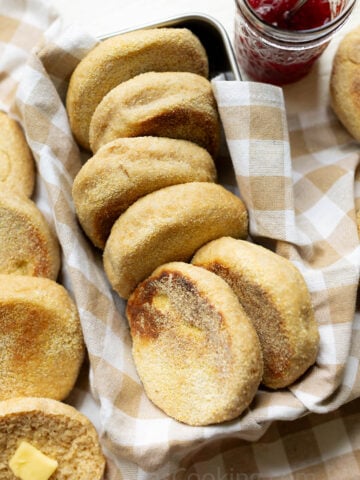
- Whole Wheat English Muffins
- Homemade Whole Wheat Hamburger Buns
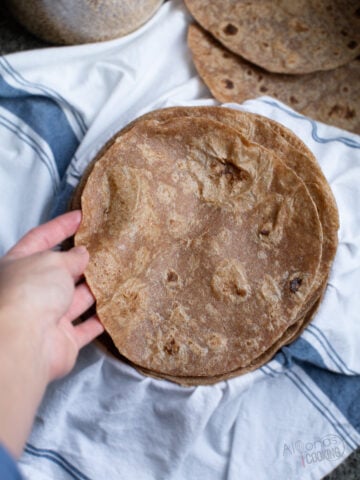
- Wrap your favorite tortillas up with this Whole Wheat Tortilla Recipe
- Pancakes- this can even be used with store-bought King Arthur flour.
- Convert this recipe for Whole wheat bread by swapping it out with freshly ground flour, it’s so good!
Note: I’ve made whole wheat naan, pizza crust, hot dog buns, no-knead bread, pita bread, and dinner rolls with fantastic results. To substitute all-purpose flour for whole wheat flour, grind soft white wheat and add 1/4 cup more of it to a standard recipe, so if a recipe calls for 1 cup of white flour, you would use 1 1/4 cups of freshly ground soft wheat flour. Recipes by weight stay the same.
Need To Buy Sourdough Starter? We sell our very own sourdough starter!
More Whole Wheat Flour Recipes To Make:
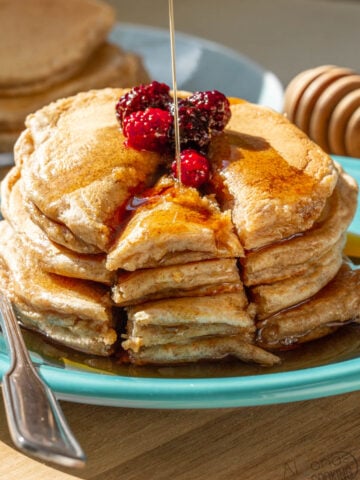
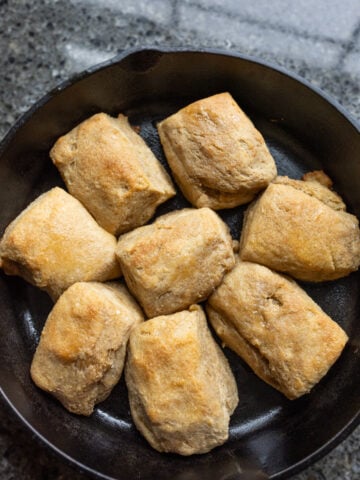
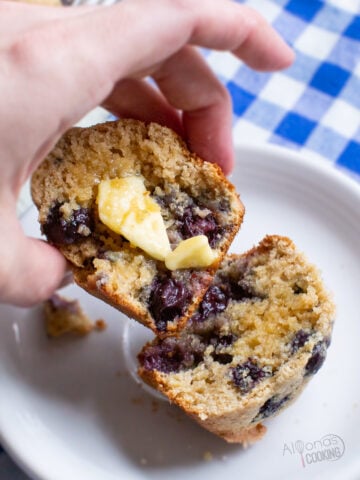
From whole wheat flour pancakes to tender and flaky biscuits, whole wheat flour can be used in just about anything!



Join My Weekly Newsletter
New recipes, homesteading, family life, what we eat in a week, and hospitality tips.
Pin this now to find it later

How To Make Whole Wheat Flour from Wheat Berries
Equipment
- 1 electric grain mill, (WonderMill is my favorite)
- 1 measuring cup
Ingredients
Ingredient:
- 1 cup whole grain, (wheat berries of choice *see notes)
Instructions
Directions:
- Place the grains into the hopper of an electric grain mill and grind to the desired flour texture (I use the pastry setting on my Wondermill to make fine flour.)

- Allow the mill to run a few seconds after grinding to self-clean. Turn the machine off and wait for the milling heads to stop running. Open the canister and use flour for your favorite recipes.


Notes
Nutrition (per serving)
Tried this recipe?
Mention @alyonascooking or hashtag #alyonascooking.