

This post may contain affiliate links. Read our full disclosure.
Having a plan takes the stress away from a busy homemaker. I find so much joy as a Christian homemaker when serving my family meals that are tasty and nutritious.
You don’t have to have a rigid, menu plan. In fact often times, I’m making a weekly plan and going by it as a guide switching things constantly. But having a well stocked pantry enables me to prepare a meal from scratch at any given time!
Small Things That Help with Meal Planning
- To do this, I ensure that my freezer is full of the foods from my ration chart. This is like our food pyramid model that we go off of. It was custom built for our needs. So that I can build my grocery list from it easily, based of what we consume on a daily basis.
- I keep a freezer full of whole-grain breads. Usually, these are sourdough breads all made from fresh milled flour. Occasionally, you’ll find some yeasted breads but it’s still made with nutritious flour.
- Vegetables, either canned or frozen.
- Canned fruits (canned peaches, canned pear pie filling, applesauce, etc).
- Well-stocked fridge with dairy products (block cheese, sour cream, and raw milk).
- Proteins: canned beans on hand and staple meats. Preferably some canned meat.
These basic nutrients give us a good source of energy, fiber, vitamins, and proteins to keep us going.
Sunday Meals
I don’t hear much about Sunday meals nowadays. However, I know that many homemakers still make Sunday meals for their families and love hosting on this day. It’s kind of sad it’s turned into a “prep day” for most folks. When really it should be the day of rest, unless you follow the sabbath then Saturday would be your Sunday…
There’s something so nostalgic about something cooking in the oven when you’re away at church and then coming home to a house full of aroma. It’s the way our grandparents made do with having cooked meals on the weekend, and it’s sad to see more and more cooks leave this tradition.
One thing that can help is to plan healthy meals around foods your family will eat. This can be a roast, cabbage rolls, or roasted chicken.
Creating menus saves time and money. Planning ahead also makes the Lord’s Day preparations more relaxed and quiet so the family can worship God in church and come home to a hot meal that was slowly cooking in the oven.
I know other moms of large families who make delicious meals for Sundays with a little planning, like freezing meatballs then baking them the morning of Sunday with BBQ sauce and filling them in a slow cooker to stay warm. Another mom makes a simple rice bake on Sunday morning, by tossing everything in a roasting pan (raw) and baking it low for 4 hours. She preps this the night before with minimal effort.
Throwing something together isn’t always a laborious task but it does take some thought, like should I thaw any meat for this dish to happen, etc…
Stay Organized
Staying organized takes discipline, but it will save you from so much meal stress!
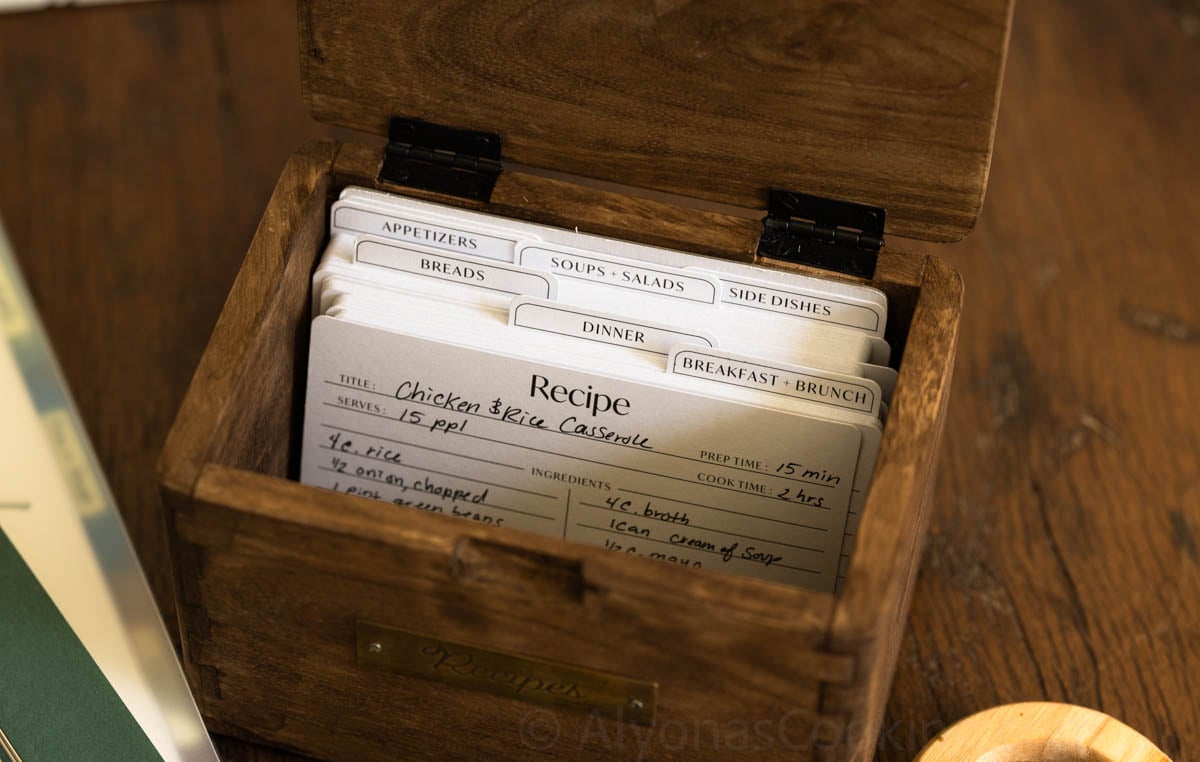
First, try to copy your favorite recipes onto recipe cards or print them and keep them tucked into a recipe binder or recipe box.
To be more organized, make a list of your favorites: one-pot meals, taco dinners, fish or soup recipes, meat recipes, sandwiches, Sunday favorites, breads, and go-to desserts.
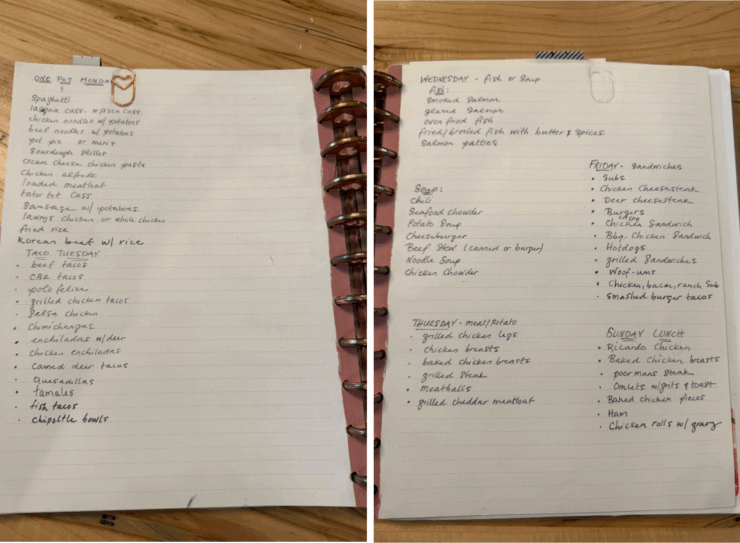
Organize them in the order given, and fill the categories in with your favorite recipes, so that you can find the recipe easily at any given moment.
Making themed dinners like “pizza night”, “Taco Tuesday”, or “Soup Day” makes it easier to plan a week of meals as you stick with the same theme on the exact day of every week.
For example, my friend does pizza night every Saturday, and says it takes the guesswork out of what she’d be making that day. Plus it helps her prep for Sunday lunch knowing that dinner is going to be pizza night.
It’s also wise to keep Saturday meals simple, if that’s your meal prep day like prepping a Sunday lunch or getting some meals into the freezer.
Organizing your written recipes keeps you organized and can save frustrations and lost time. This also helps to collect recipes more easily for a weekly meal plan or menu. It’s sort of like decluttering your recipes and narrowing down to the ones you keep.
What Planning a Week of Meals Looks Like:
Aside from my organized recipes, I keep a weekly planner where I jot down the “breakfast”, “Lunch”, and ”Dinner” sections for each day of the week. Now, this doesn’t mean I’m cooking everyday.
In fact, I try to jot down ingredients from the fridge that need to be used up asap. And built my weekly plan of meals from that. It’s works more of a guide to remind me, hey you need use up that container of cottage cheese.
We count on a lot leftovers for lunches and breakfast’s, so keep that in mind when planning a week of meals.
I love teacher planners, and this particular planner gives me more boxes where I can fill in my weekly meal planning information.
I like to make a bullet list of the meals I need to make using up ingredients from the fridge somewhere on the blank boxes in my planner. And if I need to thaw anything I just take a glance the night before.
Make Shopping Lists Consistently:
Make a weekly meal plan and shop with a list. Before you head out to the grocery store, go through your basic pantry staples and fridge.
Ideally, you’d want to keep inventory of your food in the freezer, on the canning shelf, and pantry.
See what needs to be used first and plan your meals around those foods. If you need to purchase a few items to complete a meal, write those down on your shopping list. This has helped me so much to use up my ingredients wisely.
So, double-check your pantry, refrigerator, and freezer. You might be surprised by what you find, and you can avoid buying unnecessary items. It’s also a good time to see what you are low on, so you can jot those items down, too.
Always keep a shopping list and a pen by the fridge. I like to keep a magnetic notepad on the fridge so I can jot down a random food item at any given time. My favorite places to buy Christian magnetic note pads are Faithview Books, GVS, and Goodsstores.com.
The Christian note pads have inspirational Bible quotes or encouraging reminders, making your days a little more joyful!
Get my free master list of pantry staples if you are clueless on where to start with your meal planning or shopping. If you keep these pantry staples in stock regularly in your kitchen, you’re only steps away from making a quick meal. This list includes spices, ingredients to make snack foods, staples such as flour and wheat berries, rice, pasta, and canned foods you’d never want to run out of.
Whenever any food item is getting low, add it to your shopping list and look out for sales at grocery stores near you to buy it in bulk. This saves money.
Planning A Shopping Day:
Spend a couple of hours planning and finalizing a shopping list. This is typically a slower Sunday afternoon or Monday early morning for me. Check your inventory and make a plan. You could also scan online flyers and make out a menu for the week, using sale items.
Choose one day to do your grocery shopping, and in the meantime, add food items to your shopping list when needed (keep it hanging on the fridge). It would be wise to go through your master list of staples and a binder full of favorite recipes to create a shopping plan.
If you live far away from the grocery store, plan on an entire month of menus. Then make a shopping list with a few extra meals in case you have company over.
Do your shopping early in the morning, sometimes at the beginning or mid-week, if you prefer it to be less crowded.
Having a shopping plan can save you a lot of time at the grocery store. Make a few extra stops if you need to, but have a clear list and stick with it. Then, when you come home, take care of the perishable foods first, like freezer stuff, and anything that gets stored in food storage buckets or baskets.
Avoid Impulse Buying
A meal plan avoids impulse shopping. That is why it’s good to stick with simple staple ingredients, it helps you stay on tract. Whereas, fancy ingredients or ones you’re not used to cooking, often tend to be forgotten and then wasted.
That’s not to say you can’t try new foods, it’s just simple ingredients make for a simple routine and that helps meals going, no matter what. Once you have a rhythm in place, you will find time for more special recipes and actually enjoy them.
But trying new recipes in chaos isn’t that fun and can sometimes be frustrating. Also, don’t attempt new recipes on guests, but rather stick to favorites (I learned my lesson many times).
Shopping without a list can be chaotic, easier to forget things, and can encourage impulse buys. Just because something is cheap, don’t overbuy things. It’s better to restock on ingredients you need by checking weekly sales.
Buying cheaper food items you don’t really need can clutter your pantry and be wasteful. If I know I can use grass-fed beef and I see it on sale, I’m stocking up because I know I’ll use it.
Summary
Food is a big part of our daily lives; sometimes it can be overwhelming to think about the next meal. I want to be a good steward of the things God has entrusted me with.
What really helps me is to cook simply and frugally.
This makes planning meals easier and is the way to go for consistency. So, my encouragement for a busy homemaker is to slow down, embrace the precious moments, and plan your meals wisely so you can enjoy life! Once you have a collection of simple standby recipes and a good plan, be consistent, and you will reap results.
If you liked this post, leave a comment below and let’s talk! I’d also love to hear what works for your meal planning?