

This post may contain affiliate links. Read our full disclosure.
Our desire is to share ideas of what you can bring in from the great outdoors to serve your family better. Whether it’s high-quality meat sourced from local farmers or foods that are right outside.
For us, field-to-table is simply using the wild game, honey, homegrown chickens, and grass-fed beef, that is raised and processed here at the farm. Cheesemaking and cultured milk products are other important homemaker’s tasks that need to be done at the farmhouse from the abundance of raw milk!

Not only that, but we share delicious recipes for preparing food we have sourced ourselves. Try our wild hog breakfast sausage and venison canned meat. If you preserve meat in jars, you’re steps away from creating an easy from-scratch meal.
Our Wild-Game Table:
Part of cooking from scratch is utilizing ingredients that are easily available to you. If you live by the coast, seafood would probably be the best option for a protein source. If you live on private property, then hunting is something to consider.

Our Field to Table Story:
One day, when my husband and I were deciding whether or not we should raise another meat cow, we somehow got into an interesting conversation.
My husband is a huge visual, so it’s a good thing we have a dry-erase board in the kitchen. He often walks up to the board and tries to demonstrate his ideas. This really helps with illustrating the bigger picture at times.
We went on talking about how long it takes him to process each animal (being a hunter and farmer), and we both came to the agreement that wild game was the way for us. Now, if you’re reading this and thinking there’s no way this resonates, it does. You can easily use domestic pork and beef from the store with my wild hog and venison recipes!
Venison is really like leaner beef, and wild hogs are like lean pigs. Thus making them easily interchangeable with the more domestic animals.
We also discussed the vegetables we were strictly going to grow to sustain our family and the grains we needed to store and keep on hand in order to feed our family. (If you’re looking for inspiration with cooking from garden-fresh vegetables check out my seasonal eating post where I go into depth about what I cook from seasonal vegetables).
I think by sharing what we bring into our home, whether it’s from the field-to-table or from store-to-table, it can be a good illustration for the homemaker. I don’t know about you, but sometimes I buy different ingredients and then realize what was I even going to make with that bag of dried lentils?
My point is, figure out what your family eats and write it down. Then compile your pantry list from these ingredients to be more organized. This is an important step towards good stewardship.

The Food Ration Chart (Food Pyramid):
So, after figuring out what best fits our food ration, we decided to cook in this way. Now, if all fails, it is okay to source these ingredients from the grocery store, or nowadays from different online food suppliers. The goal is to stock these foods and look out for deals, or in our case, hunting opportunities.
This simplified our meal planning and food costs because you know exactly what to look for and not get lost in aisles of the grocery store trying to decide what you need, or worse, what to cook. (That’s not the place to meal plan)!
Here is the exact chart my husband drew out. In case you’re wondering, 1-4 (on top) are grains like rice, Hard White, Hard Red, and soft wheat.

I’ve also adapted to cooking with venison, wild hogs, and homegrown chickens in this way. It’s much higher quality meats, leaner, and well, a little gamey, but nothing not salvageable (I have tips to getting rid of the gamey taste below).
When you make a simple chart, it makes cooking so much simpler and enjoyable! It’s like a custom food pyramid, but with the foods that we would consume based on the pyramid model. Sometimes visuals do resonate better with our brains.
Like a meal plan, the food ration chart was a game-changer. It made more sense for us to cook this way. Visualizing a guide illustrates the foods you need to stock and keep on hand for eating healthy. For us, that’s wholesome carbs (like brown rice, breads made from wheat berries, and different grains), fruits and vegetables, dairy, proteins (meats or beans), and healthy fats and sweeteners.
Here is a custom Food Ration (Pyramid) chart that we’ve built to show you exactly what we eat. We try to keep these ingredients on hand. Print it here for FREE if you can use it.
Now let’s talk about everything I know about wild game, homegrown chickens, and honey that we bring in from the field.
Wild Hogs:
Wild hogs are leaner than domestic pigs and are trickier to catch. They can be very aggressive animals and can often escape traps sooner than you think. There are a lot of them roaming around our fields, and they can be hunted at any season where we live.

From our experience, the females are less gamey. If you catch a wild boar (older male) they have way more oxytocin and the meat will smell very strong (like hormones). If that is what we end up catching, we process the meat and give it to the dogs.
The younger hogs don’t smell as gamey. For homesteaders, a favorite way to preserve venison or wild hog is to make bulk amounts of ground meat using a meat grinder.
It’s not ideal to get bacon out of wild hogs, although you probably can from the older ones. I prefer to render their small amount of fat (lard) instead. Now, they do have slabs of fat, but keep in mind that these animals roam and eat wild, so they are much leaner. Just don’t get your expectations high for lots of bacon.
For bacon, I supplement with a no-nitrate bacon, also called uncured bacon, from the grocery store. These types of bacon are more costly but have cleaner ingredients and, in my opinion, are pretty much the same as if you were getting them from a local butcher.
The lard I will use for sautéing eggs, vegetables, or anywhere you’d need to fry foods. So that’s a free cooking fat, too! Lard is milder than tallow and so, is therefore more versatile.
Grass-Fed Beef
Beef takes about two days to process and to fully package, whereas a deer or hog is processed completely in a few hours.
If you are wondering whether a whole cow suits your family, then figure out what cuts of meat your family mostly eats. The main cuts of beef are chuck steak, Ribs, Shank, Brisket, Flank, T-bone, Sirloin, rump roast, and round steak.
A 1,000-pound steer yields about 878 pounds of packaged meat that has been cut and packaged. Some of the meat trimmings can go into making sausage or ground beef. The meat bones can be used for bone broth, and fat can be rendered into tallow.
You see, there are many benefits of buying a whole steer for meat: you’ll have a big supply of meat (for a whole year’s worth or more) and healthy fat for all your cooking needs. To me, that’s a score.
Equipment:
Butchering a steer from the farm can be a challenge, especially if you don’t have the right equipment. When we started, my husband had a limited supply of butchering equipment, so in that case, we used a Cordless Reciprocating Saw (not recommended) to slice our cuts of beef.
After going through all of our beef, I realized that ground beef was my favorite cut of meat to use. It’s just effortless to cook something up from 1-pound packages of meat (as it can be cooked from frozen). Roasts and other cuts went much more slowly.
Over the years of cooking for my family, I’ve realized that simple meals are the ones that get to the table for everyday cooking. Besides, my husband doesn’t trust anyone with his meat source and prefers to do all the hard work himself, so that we can eat hormone-free meat as much as possible.
Sometimes the diverse cuisines call for special cuts of meat, which, in my opinion, overwhelm me. I can’t bring myself to buy fancy lamb chops, and for us, chuck roast and steaks are a rare treat. Figure out what your family’s needs are and if it makes sense for you.
Considering purchasing a whole or half a cow from a butchering shop is a frugal way to stock up on beef. If you choose to raise your own meat, or go fishing or hunting for your protein source, you are choosing nutrient-dense foods to feed your family.
How To Get Rid of The Gamey Taste?
Wild game can taste “gamey”, meaning it has a stronger flavor of meat. To tone this down, I’ve found that adding Italian dressing (dry or prepared) removes that smell. And if you come to think of it vinegar is great for removing strong odors.
Keep in mind that venison and wild hogs are leaner. That is why I tend to add a little lard or fat to moisten ground pork.
Chicken Broilers (Homegrown)
Our boys raise our chickens (hens), broilers, or ducks (depending on what we have going on in the season).
We usually order Novogen chickens for egg layers. For chicken broilers, we like Freedom Rangers. My go-to cooking method with homegrown chickens is roasting. I can season the whole bird and put it into the oven or Instant Pot for rotisserie-style chicken. Then once cooked, I can use the meat for meals throughout the week and make homemade chicken broth from the bones.
If you prefer to have different cuts of chicken, simply divide the cuts on butchering day and freeze the carcasses separately.
You could also take the extra step and do some canning. Canned chicken chunks or broth are great ways to stock your pantry. To can chicken broth in bulk, I’ll throw 3-4 carcasses into a big roaster, set it overnight on low heat, and can it the next day. Making chicken broth weekly works better for me than designating a huge canning day. It’s the little bits that count.
Honey
My husband harvests his own honey. He has a few hives throughout the property. This bee hive was inherited through my grandfather who was a bee keeper for most of his life.

Our Favorite Butchering Supplies:
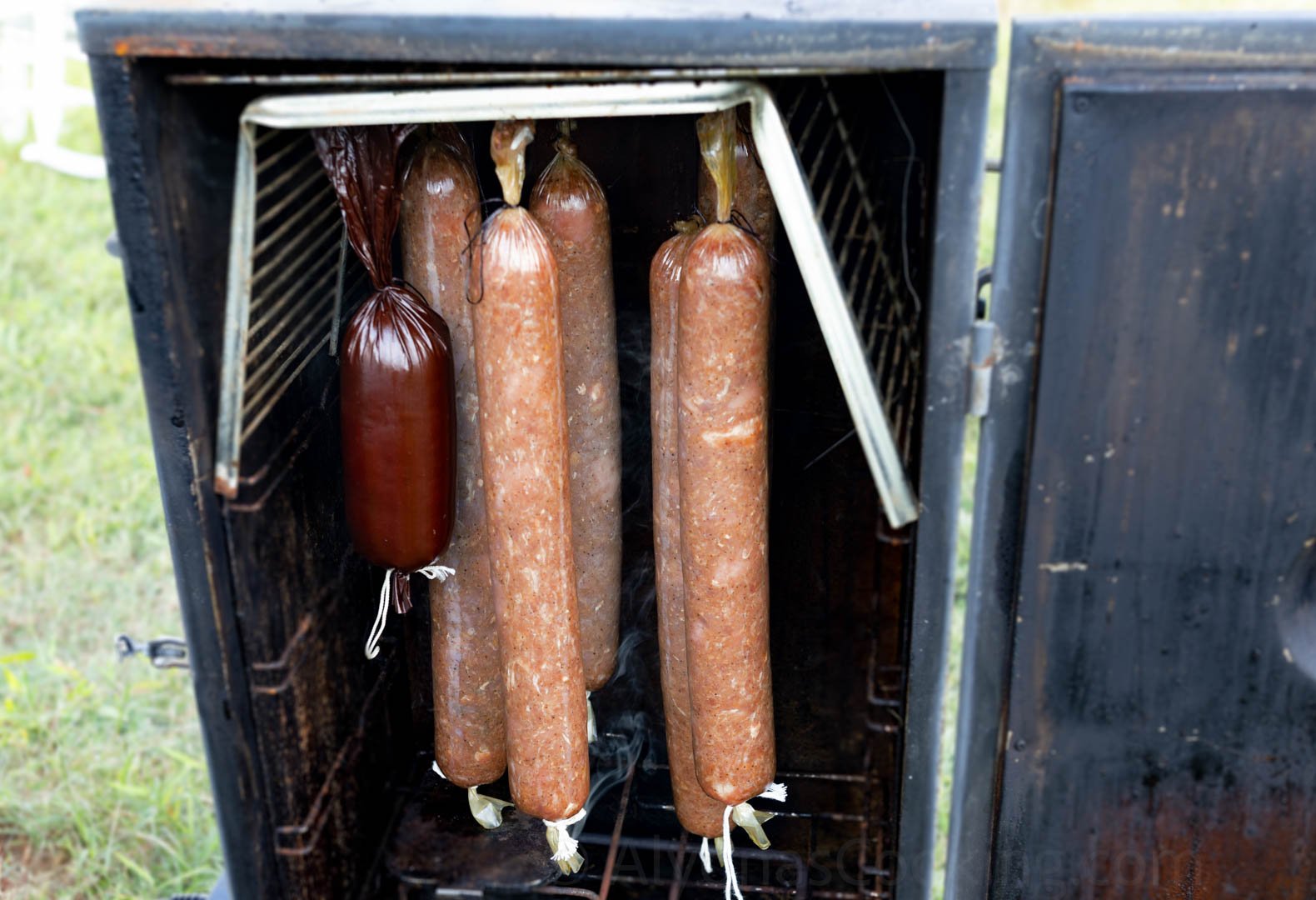
With the right tools, processing can go so much smoothly. I highly recommend a large chest freezer for storing the meat once it is processed. Invest in the proper packaging. Whether it be one-pound ground meat baggies or vacuum sealer bags, a sealer is so important. I also recommend a good-quality meat grinder, and if you’re into sausage making, you will probably want to invest in a sausage maker, meat thermometer, and smoker. We order most of our butchering supplies from a Mennonite Catalog or Amazon.
Other Sources of Protein:
If you’re not into poultry or meat, fishing is a great way to incorporate extra protein into your diet. Many of our ancestors went fishing and learned how to preserve it by smoking or curing.
Another important source of protein for us is raw milk. We love milk kefir in raw milk cheeses and smoothies. Homemade sour cream, yogurt, and kefir cream cheese are easy to make and make a cheap protein. With a little fermentation, it can be probiotic-rich.
Conclusion:
This farm-to-table article was to encourage you to keep meals simple, cut back on all the different cuts offered today at the supermarkets, and stick to the ones that you can make at any given time. Stay frugal, stay safe, and remember to thank God for all His provisions.